Adopting a Cat from Cyprus
Published on 18 October 2026
Also available in:DeutschРусскийΕλληνικά
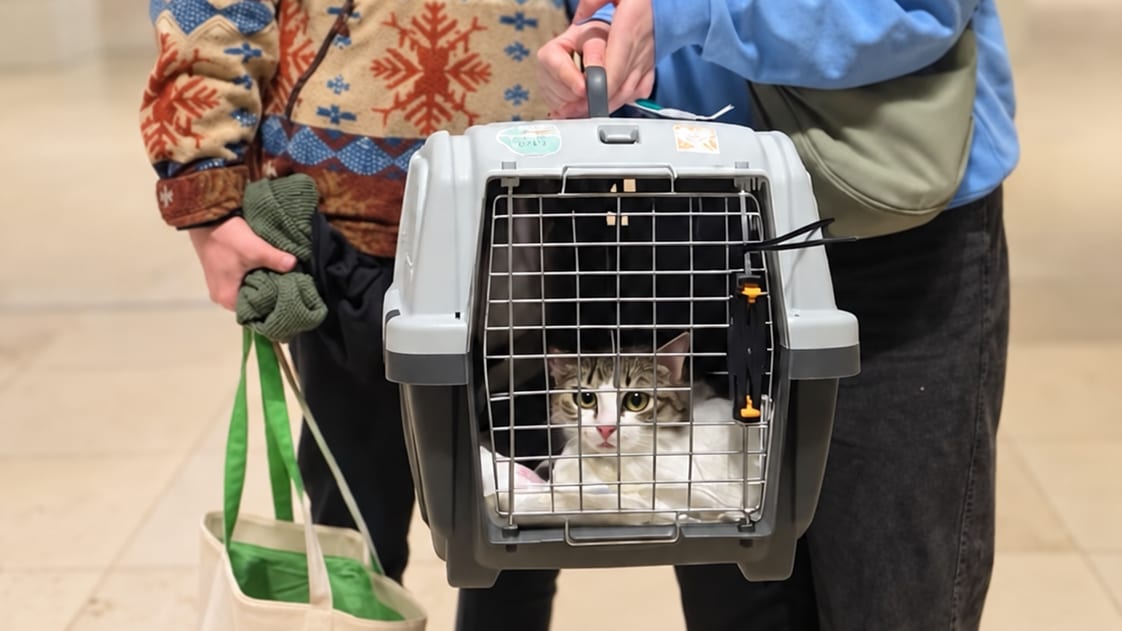
Countless cats live on the streets of Cyprus, and far from all of them find a home there. Cypriot Tails is a private volunteer initiative from Limassol: we place cats from Cyprus with families in Germany, Austria, Switzerland, the Netherlands and other European countries. Here you can read how an adoption works with us, what costs to expect and which papers your cat gets for the journey.
At a glance
- Application: online in a few minutes, no PDFs. We get back to you within 48 hours.
- Home check: by video or at your home.
- Contract: with the adoption agreement you commit to caring for the cat for life – as an indoor cat, without free roaming.
- Costs: an adoption fee of €150 for the veterinary preparation, plus travel costs – about €330–470 in total.
- Time: from one week to two months.
- Journey: the cat flies with a flight buddy from Larnaca or Paphos to an airport near you.
Step by step
1. Choose a cat
Our cat catalogue lists all the cats looking for a home right now; you can filter by age, gender and colour. Each profile describes the cat's character and shows whether it is neutered, has special needs or is, for example, FIV-positive. Some cats already live in a foster home in Germany or the Netherlands: you collect them there, with the same contract and the same adoption fee.
2. Apply online
You start the application right on the cat's profile. The questionnaire has four short steps:
- Contact: name, email, phone, country and town. You must be at least 18.
- Home and safety: flat or house, rented or owned (if rented: with your landlord's permission), balcony or garden – and how windows and balcony are secured, for example with tilt-window guards.
- Household: who lives with you, which animals you already have and whether anyone is allergic to cats.
- Commitment: you confirm that you know the costs, will collect the cat at the nearest international airport and will give it time to settle in.
We read every application carefully and get back to you within 48 hours.
3. Home check and contract
If the application fits, we get to know you and your home – in a home check by video or in person. We talk about the cat, your daily life and your questions. Only once it is settled that the cat is moving in with you do you sign the adoption agreement. It holds your details with your ID number and the cat's data: passport and microchip number, neutering and known medical notes. With your signature you agree:
- to care for the cat well for its whole life – an adoption is not a trial period;
- to keep it indoors: it may only go out onto a secured balcony or into a fully secured garden, free roaming is not allowed;
- to have it neutered once it is old enough, if that has not been done yet;
- to register its microchip in your country;
- to send us photos and news now and then and to tell us if your address changes;
- not to sell it or give it away without talking to us first.
4. Preparation in Cyprus
Until the flight we take care of everything the cat needs for the journey: vaccinations against cat flu and feline panleukopenia, rabies vaccination, parasite treatment, FIV/FeLV test, microchip and EU pet passport. It may fly 21 days after the rabies vaccination at the earliest; until then it often lives with a foster family in Cyprus. No more than 48 hours before departure a vet checks that it is fit to fly, and the day before the flight the veterinary authority issues the health certificate.
5. The flight
Your cat does not fly alone but with an escort – our flight buddy. Depending on the airline, it travels in the cabin or as checked baggage. We prepare all the documents and bring the cat to check-in at Larnaca or Paphos. Not every airline takes animals – we check that in advance.
6. Arrival and handover
Flights from Larnaca and Paphos go to many cities; we look for a connection to the airport closest to you. In the arrivals hall the flight buddy hands the cat over to you; we arrange the meeting point and time with everyone. On that day you also pay the adoption fee.
7. The first weeks at home
A cat that has lived on the street or in a foster home often needs a few weeks after the move before it feels safe. A quiet room for the first days, fixed routines and plenty of patience help. Use this time to register its microchip – in Germany, for example, free of charge with TASSO or FINDEFIX: if the cat ever slips out, it will find its way back to you faster. We stay in touch after the adoption too and are always happy to get photos and news.
What does an adoption cost?
- Adoption fee: €150 for the cat's preparation: vaccinations, rabies vaccination, parasite treatment, FIV/FeLV test, microchip, EU pet passport, the pre-flight health check and the veterinary paperwork.
- Flight crate: €40–80.
- The cat's ticket: €60–120.
- The escort's ticket: €80–120 – the cat never flies alone, always with a flight buddy.
Together that comes to about €330–470; the exact amount depends on the destination and the flights available. You pay for the tickets in advance, when the flight is booked, and the adoption fee on the day of arrival. The fee is not refunded unless the law requires otherwise. After that you bear the running costs, as with any cat: food, litter and the vet.
Which papers does the cat get?
- Microchip: it identifies the cat beyond doubt; its number is in the passport and in the adoption agreement.
- EU pet passport: with all vaccinations.
- Rabies vaccination: at least 21 days before travel.
- Veterinary examination: no more than 48 hours before departure.
- Official health certificate: a cat placed in another country through an animal welfare organisation does not travel as its owner's pet. It therefore needs a certificate that the veterinary authority in Cyprus issues in the EU's TRACES system.
What we expect from you
- You are at least 18 years old.
- Your cat lives indoors; free roaming is not allowed. Windows, balcony and garden are secured so that it can neither escape nor fall – for example with tilt-window guards and netting.
- We place kittens in pairs – or on their own if you already have a cat.
- If you rent, your landlord allows a cat.
- Any allergies in the household have been cleared up.
- You collect the cat at the airport.
- You give it time to arrive.
Frequently asked questions
How long does it take from application to arrival?
Between one week and two months. It is quick when the cat is already vaccinated and ready to travel and a flight on your route is coming up soon. After the rabies vaccination it has to wait at least 21 days before it may fly.
Which countries do you place cats in?
Germany, Austria, Switzerland, the Netherlands and other EU countries.
Is the cat healthy?
Before the flight a vet examines the cat and confirms that it is fit to travel; it has been tested for FIV and FeLV. That examination shows its condition on that day – nobody can guarantee that no illness will appear later, and vet costs after the adoption are yours. With street cats the history is often unknown; age and breed can usually only be estimated.
What if it doesn't work out after all?
An adoption is a decision for the cat's whole life. If serious difficulties arise anyway, or you can no longer care for the cat, contact us as early as possible: we will look for a solution together, and until then the cat stays well cared for with you. Please do not give it away or pass it on without agreeing it with us.
I'm flying from Cyprus myself – can I take a cat with me?
Yes, as a flight buddy. It costs you nothing: we cover all the cat's costs. Get in touch at least two weeks before departure, ideally before you book – more under Become a flight buddy.
Any questions?
Write to us through the contact form and we will reply by email. Or have a look right away at the cats looking for a home.